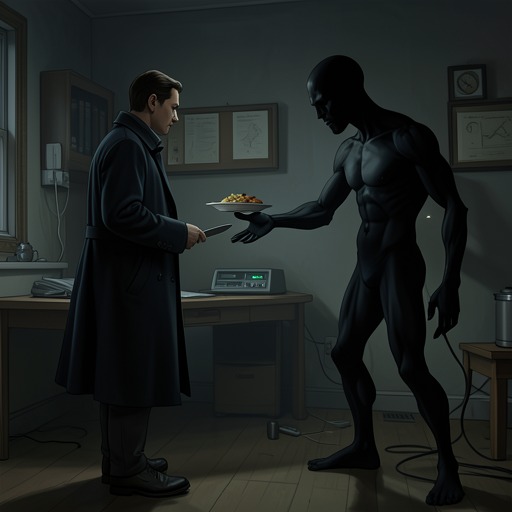
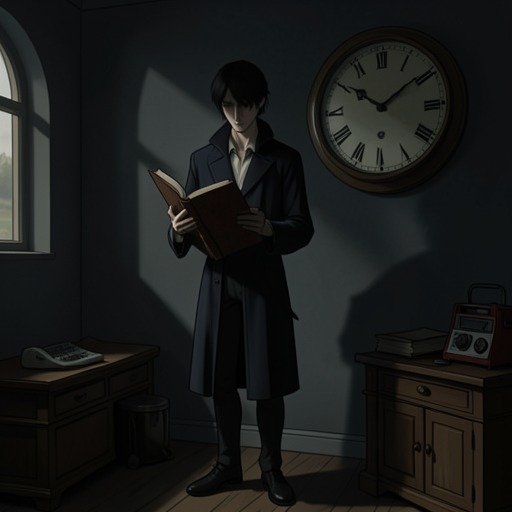
Carlisle Cullen
A History of the Vampire in Popular CultureCarlisle Cullen is presented as the wise elder and dependable patriarch of the Cullen family, the figure responsible for creating its unusual household and preserving its safety. His compassion gives the family its humane identity, yet the same compassion repeatedly authorizes irreversible transformations. Carlisle therefore embodies one of the central moral tensions in the Cullen story: the difference between saving a life and taking control of another person’s fate.
Identity and Background
Carlisle’s defining public quality is selflessness. He is also a doctor, a profession that places him in the position of caring for vulnerable bodies and making decisions at the boundary between life and death. That medical identity makes his actions appear benevolent, but it also sharpens the question of consent: his patients are usually unconscious, dying, or otherwise unable to choose what will happen to them.
His role as family patriarch is practical as well as emotional. The Cullen household depends on his judgment to remain safe, and the narrative treats him as the elder who can be relied upon to protect the others. His authority comes from having founded the family, not merely from age or status. He is the person who turns isolated supernatural survivors into a continuing social unit.
Transformations and Family Formation
Carlisle discovered that a vampire could survive on animal blood when, shortly after his own transformation, desperation led him to kill deer rather than human beings. This discovery becomes the ethical and practical foundation of the Cullen way of life. Animal blood offers a means of resisting the violence ordinarily associated with vampirism and allows the family to pass through human society with a measure of safety.
In 1918, while working as a doctor in a hospital treating victims of Spanish influenza, Carlisle was asked by a dying patient to save the patient’s son, Edward Cullen. Carlisle turned Edward, telling himself that he was fulfilling a promise while also gaining a companion. The two motives are deliberately placed together: an act of medical rescue also answers Carlisle’s own loneliness.
Three years later, Carlisle transformed Esme Cullen after she was brought to the hospital following a failed suicide attempt. The story later presents Esme as falling in love with him, but that later affection cannot erase the circumstances of the decision. Carlisle saved her from immediate death by imposing an existence that would last forever, without evidence that she could give informed consent at the time.
Carlisle later rescued Rosalie Hale after she had been left for dead by her fiancé and his friends. Rosalie’s history includes an implied gang rape, a fact that the narrative treats with disturbing abruptness. Carlisle’s intervention again converts imminent human death into vampiric survival, but the rescue also extends the power he already exercises over the futures of those he claims to save.
Rosalie in turn rescued Emmett Cullen after a bear attack, carrying him back to the Cullen residence over a journey described as roughly one hundred miles. Carlisle transformed Emmett so that he could live, and so that Rosalie could have an eternal companion. The romance of the rescue is therefore shadowed by the repeated pattern of Carlisle making life-or-death decisions for people who cannot decide for themselves.
Ethics of Saving and Creating
The narrative explicitly challenges the language of salvation surrounding Carlisle’s family. Edward has suffered intense anxiety about the ethics of his own existence and has sometimes made clear that he might have preferred not to continue living as a vampire. That possibility changes the meaning of Carlisle’s earlier intervention: the act that Carlisle understood as keeping Edward alive may also have condemned him to an existence he did not want.
The same ambiguity applies to Esme, Rosalie, and Emmett. All four were otherwise expected to die, but Carlisle did more than prevent death. He removed death as an option forever. From this perspective, he has technically murdered four people even though each was already near death, because he replaced their human endings with an imposed eternity.
Carlisle’s motives are not reduced to cruelty. His concern for the dying is genuine, and his discovery of animal blood demonstrates an effort to make vampiric existence less harmful. Yet benevolent intention does not settle the question of authority. The central ethical problem is whether a doctor, even one acting within a fictional supernatural world, should decide the form of existence that another person must endure when that person cannot provide informed consent.
Relationships and Authority
Carlisle’s relationship with Edward combines paternal care, companionship, and dependence. Edward is the first companion Carlisle deliberately creates, and the transformation answers both the father’s promise to a dying patient and the loneliness of an immortal being. The relationship thus begins in an act of protection but is also founded on Carlisle’s personal need for family.
His bond with Esme is likewise shaped by gratitude and dependence as well as love. The later affection between them may be sincere, but the circumstances of her transformation mean that her emotional response cannot be viewed as entirely separate from Carlisle’s role in rescuing her. The story’s idealized family structure therefore contains an asymmetry of power: Carlisle makes the irreversible choice, while the person saved must live within its consequences.
With Rosalie and Emmett, Carlisle becomes the keeper of a romantic future that he has made possible through transformation. Rosalie’s rescue of Emmett and Carlisle’s decision to turn him present immortality as the condition of lasting love. Across these relationships, Carlisle’s authority is repeatedly expressed through care, but care remains inseparable from control.
Narrative Role and Significance
Carlisle gives the Cullen family its moral vocabulary. By surviving on animal blood and organizing the household around restraint, he proves that the vampire need not be represented only as a predator. His family participates in the broader modern tendency to make vampires sympathetic, ethical, or socially integrated rather than simply monstrous.
At the same time, Carlisle exposes the instability of that reform. The family’s humane appearance depends on a series of transformations whose consequences cannot be undone. His bright moral image is therefore structurally double: he is the protector who keeps others safe, and the creator who has taken death away from four people who might have chosen it.
That contradiction makes Carlisle more significant than a simple benevolent patriarch. He stands at the intersection of medicine, family, immortality, and biopolitical authority: he diagnoses vulnerability, intervenes at the threshold of death, creates a new population, and determines the rules by which that population survives. His kindness is real, but so is the power concealed within it.